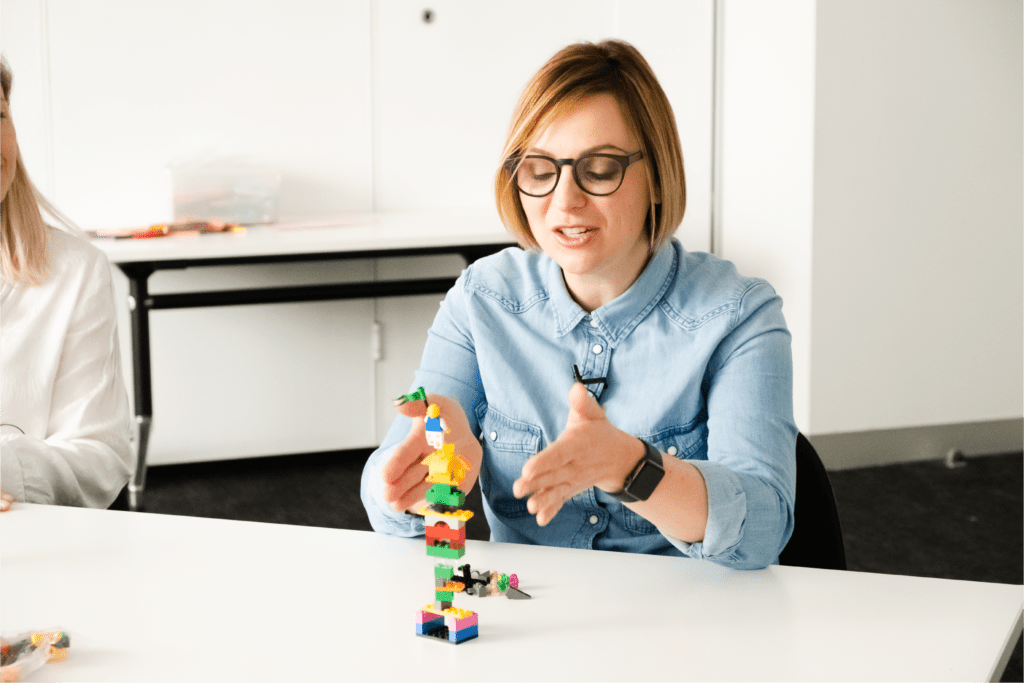


There is a reason why LEGO® has been a beloved brand for generations – it brings joy, sparks imagination and encourages creativity. But have you ever considered how this childhood toy could translate into a powerful tool for business innovation and team building? Welcome to the world of LEGO® Serious Play® – a globally recognised […]
Category Archives: Uncategorized
Welcome to the fascinating world of LEGO® Serious Play®, a methodology that is transforming the learning landscape in universities, colleges, and schools. When we think of LEGO® bricks, many of us conjure up childhood memories of constructing elaborate buildings, vehicles, or maybe even an entire city. But did you know that these same LEGO® bricks […]
The LEGO® Serious Play® method is a powerful addition to your facilitator toolkit. It’s been used for over 20 years by top consultants, facilitators, coaches, project managers, university and business school lecturers, organizational development and agile practitioners. They use it for a whole variety of different purposes because the process is adaptable to different contexts. […]
Data and feedback are definitely going to be your go-to way of determining whether your training has had an impact on competency levels. However, it’s not always possible to find an easy-to-use tool to determine whether you have had a return on investment. Last month alone, over 600 participants selected one of our Play4Business online courses […]
The learning landscape continues to evolve at a rapid pace and there are so many different learning options available. Online, in-person, virtual live, webinar, blended – how do you choose what is right? Here are some considerations for you to review before deciding what would work best in your own context: What is your usual completion […]
Your team leader and their team members are at the center of the learning experience. That might well sound like, of course, why wouldn’t they be. However, over the past 30 years we have often been called on to design learning programs in a wide range of learning modalities and environments. It’s only on very […]
- 1
- 2