Last Updated by the Serious Play Business Content Team on July 22, 2026.
How to Sell LEGO® Serious Play® Workshops: A Facilitator’s Guide to Winning Clients
Executive Summary
Plenty of facilitators fall in love with LEGO® SERIOUS PLAY® and then hit the same wall: they cannot sell it. The method works in the room, clients enjoy it, and yet the pipeline stays thin because the facilitator is positioned as an entertainer with bricks rather than a partner who solves problems. Selling is not a separate talent from facilitating — it is the same skill pointed outward.
This guide covers how to position yourself beyond “the LEGO person,” how to run a discovery conversation that reframes the session as a business tool, and how to structure a proposal that a decision-maker can approve. Winning the work is mostly about changing what the buyer thinks they are buying.
You sell LEGO® SERIOUS PLAY® by selling the outcome, not the activity. Buyers do not need another team-building novelty; they need alignment, a decision, a strategy, or a team that will actually commit to a plan. When you lead with the business problem the session solves and let the bricks be the how rather than the what, you stop competing with party activities and start competing with consultants — a category that commands both trust and budget.
The Selling Problem Nobody Warns You About
Facilitator training teaches you to run a flawless session. It rarely teaches you to fill the room in the first place. So capable facilitators end up stuck, not because their work is weak, but because their pitch is. The single most common failure is leading with the method — “I run LEGO® SERIOUS PLAY® workshops” — instead of the result the client actually wants.
The moment a buyer hears “LEGO,” a picture forms: colorful, fun, probably a nice-to-have. That picture sets the budget, and it is a small one. Your whole selling job is to replace that picture with a different one — a leadership team leaving the room aligned on its top three priorities — before the price conversation ever starts.
Reposition From “The LEGO Trainer” to a Trusted Partner
The difference between a facilitator who scrapes for gigs and one with a waiting list is usually positioning, not skill.
Lead With the Problem, Not the Bricks
Open every conversation and every piece of marketing with the business challenge you solve — misalignment, stalled strategy, teams that talk past each other — and introduce the method only as the mechanism. The client should hear “this person solves my problem” long before they hear “with LEGO.”
Speak the Buyer’s Language
Executives buy outcomes in their own vocabulary: alignment, clarity, commitment, faster decisions, reduced risk. Translate the method’s benefits into those words. “Everyone builds a model” is a feature; “everyone in the room contributes, so the decision actually sticks” is a benefit a leader will pay for.
People do not buy the workshop. They buy the version of their organization that exists after the workshop. Sell that.
Show, Don’t Just Tell
Case examples, photographs of models (with permission), and short before-and-after descriptions do more than any adjective. Let prospects see a real team reaching a real outcome, and the “is this serious?” objection largely answers itself.

Run a Discovery Conversation That Reframes the Session
The sale is usually won or lost before you write a proposal — in the first real conversation. Treat it as discovery, not a pitch.
- Ask about the problem first. What is stuck, what decision is looming, what would “a great result” look like for them? Let them describe the pain in their own words.
- Reflect it back as an outcome. Restate what they need — alignment, a decision, a plan — so they hear you understand the business, not just the technique.
- Introduce the method as the route to that outcome. Now the bricks are the obvious way to get where they already want to go, not a gimmick you are pushing.
- Confirm the stakes. A workshop feeding a live strategic decision justifies a very different investment than a generic away-day, and this is where that becomes clear to both of you.
How to Structure a Proposal Clients Approve
A proposal is not a price list; it is a short argument that the outcome is worth the investment.
Keep it tight and make every element earn its place:
- The problem, in the client’s own words from your discovery call.
- The outcome they will have when the session ends.
- The approach, described in plain business terms with the method as the mechanism.
- What’s included — scoping, tailored design, facilitation, and a written synthesis — as one clear scope.
- The investment, presented as a single figure attached to the outcome, not a menu of hours.
How to Choose Your Selling Approach
Match your approach to the buyer in front of you:
- Selling to a busy executive sponsor? Lead with the outcome and the decision it feeds; keep the method to a sentence.
- Selling to an HR or L&D buyer? Connect the session to engagement, capability, and culture goals they already report on.
- Selling to a skeptic who thinks it’s “just play”? Show a real case and reframe around the business result; let evidence beat the objection.
- Selling to a repeat client? Package a named, repeatable offer so re-booking is a single easy yes.
The Mindset Shift That Makes Selling Easier
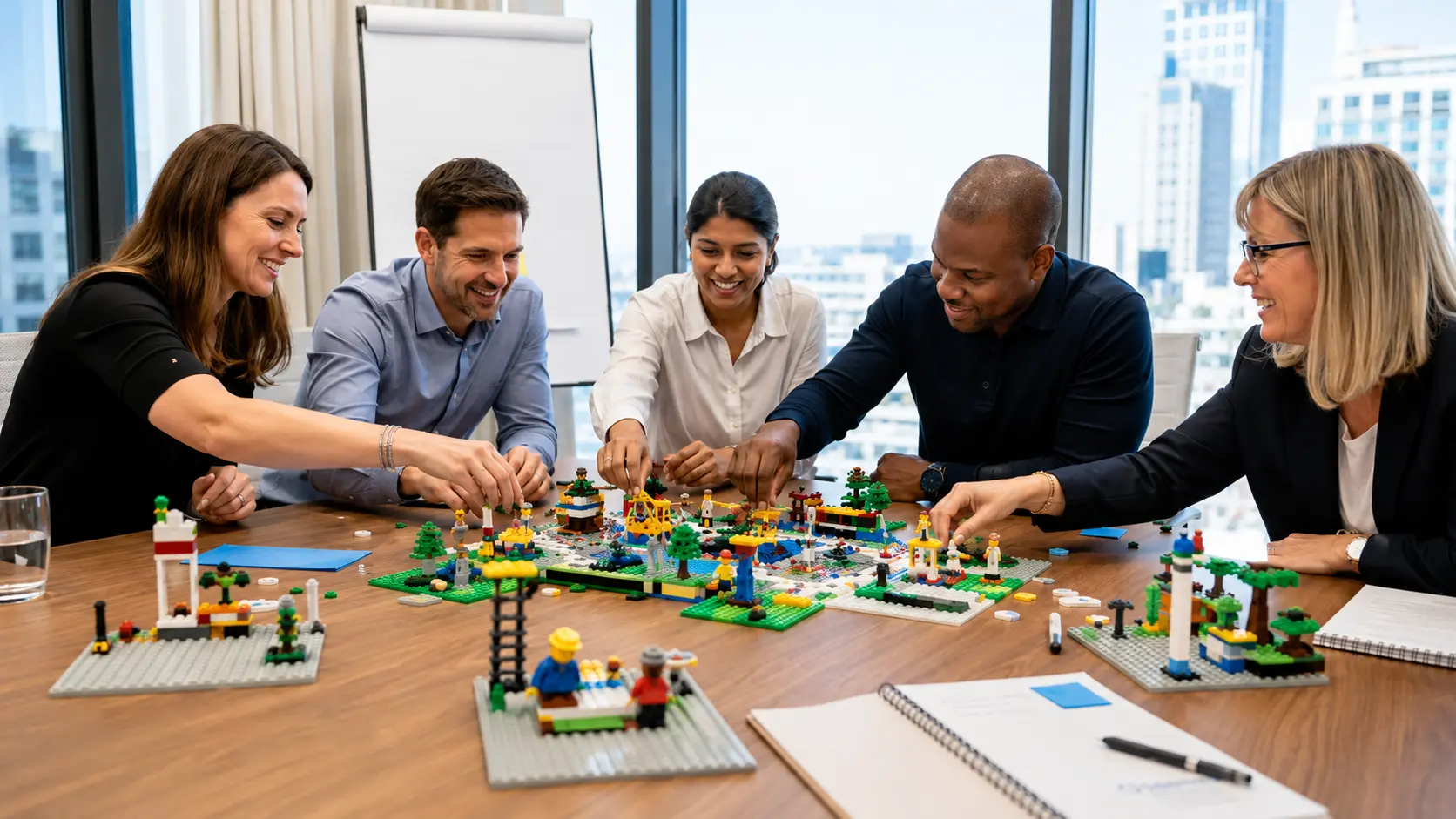
Selling gets dramatically easier the moment you believe the session is worth what you charge — and that belief comes from understanding why the method delivers. A well-designed LSP session routinely surfaces sharper insight in sixty to ninety minutes than a team reaches in weeks of ordinary meetings, because the design reduces ambiguity and makes the relationships between issues visible to everyone at once. When you truly understand that leverage, you stop apologizing for the bricks and start selling the result with a straight face.
Build a Practice, Not Just a Skillset
The facilitators who stay booked are the ones who can both run the room and win the room. Our training pairs methodological depth with the confidence to position your work as the business tool it actually is.
To understand the full methodology behind the workshop design described above, read the LEGO® Serious Play® method explained.
Frequently Asked Questions
Why do I struggle to sell LEGO® Serious Play® even though sessions go well?
Almost always it is positioning. If you lead with the method, buyers picture a fun activity and price it as a nice-to-have. Lead with the business problem you solve and let the method be the mechanism, and the same work reads as valuable.
How do I stop being seen as “just the LEGO trainer”?
Change what you talk about first. Open with the outcome — alignment, a decision, a committed plan — and introduce the bricks only as the route to it. Case examples and outcome-focused language do the rest.
What should a LEGO® Serious Play® proposal include?
The client’s problem in their own words, the outcome they’ll have afterward, your approach in plain business terms, a clear scope (scoping, design, facilitation, synthesis), and a single investment figure attached to the outcome rather than a list of hours.
How do I handle a client who thinks it’s not serious?
Don’t argue the point — show it. A short real-world case with a concrete business result reframes the conversation faster than any explanation, because it replaces the “toy” picture with an outcome picture.
Do I need to be a great salesperson to fill my calendar?
No. You need to be clear. Selling facilitation is mostly discovery — understanding the client’s problem and reflecting it back as an outcome the method can reach. If you can facilitate a room, you already have the core skill.